In a world that constantly urges us to add more, to fill every corner, to maximize every square meter, there is a radical act in choosing emptiness. Negative space — the intentional absence of objects, color, and visual noise — is perhaps the most underappreciated element in interior design.
When we speak of negative space at ATELIER INTÉRIEUR, we are not talking about minimalism as an aesthetic trend. We are speaking about breathing room — literal and metaphorical — that allows the elements we do choose to hold more weight, more meaning, more presence.
"The pause between notes in music. The silence between words in poetry. This is the philosophy we bring to our residential projects."
The Japanese Concept of Ma
Consider the Japanese concept of ma — the meaningful space between things. In traditional Japanese architecture, the void is as carefully composed as the solid. The pause between notes in music. The silence between words in poetry. This is the philosophy we bring to our residential projects.
The Practical Application
Creating effective negative space requires discipline. It begins with editing — removing the unnecessary until only the essential remains. It continues with proportion — understanding that a single piece of furniture in a large room can command more attention than a crowded arrangement. And it concludes with intention — every empty wall, every clear surface, every open vista must feel deliberate, not accidental.
Three Principles
Edit ruthlessly. Start by removing everything that doesn't serve a function or bring you joy. This is harder than it sounds — we become attached to objects, to arrangements, to the familiar.
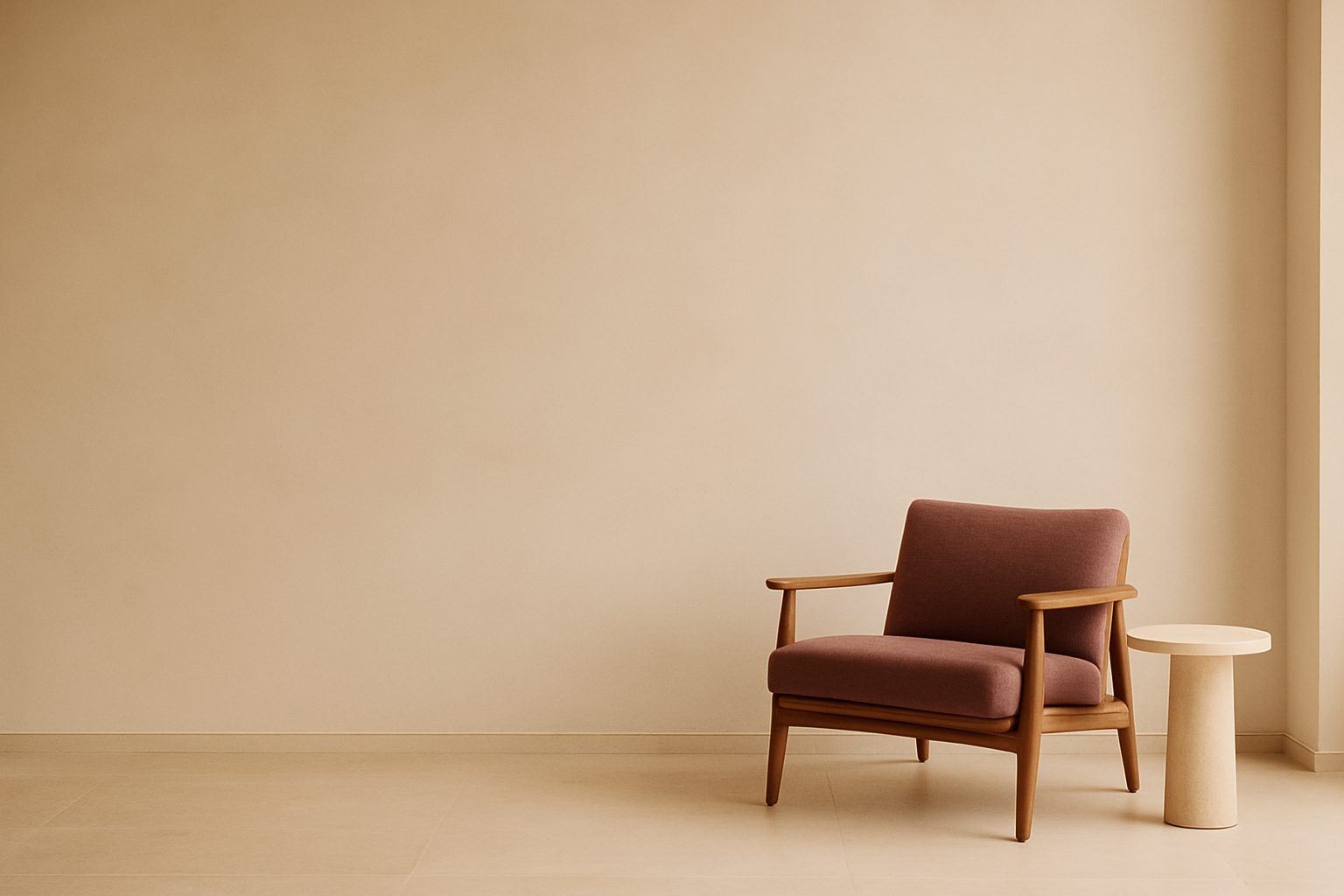
Embrace asymmetry. Negative space doesn't mean balanced emptiness. Often the most dynamic rooms have their weight concentrated in one area, leaving expansive voids elsewhere.
Let light be material. Empty space is where light lives. The way sunlight moves across a bare wall throughout the day becomes a kind of living art.
The result is a space that doesn't just look calm — it feels calm. A room that invites contemplation rather than demanding attention. An interior that honors the people within it by giving them room to simply be.